Posts

Priced off the road: against extending London's congestion charge

Image
The congestion charge is one of the most progressive examples of road pricing. Here’s why extending it would be regressive.  It pays to begin with a history lesson: the congestion charge was launched – against a wave of substantial political opposition across the board – by Ken Livingstone, in 2003. Responsible for substantial reforms in his time as the first Mayor of London, Livingstone saw backlash  for the congestion charge from across the political spectrum, not just from taxi drivers or private car users but theatre workers and the Samaritans. Livingstone was himself a prominent part of Labour’s Militant faction and leader of the Greater London Council when the Thatcher administration saw it as an enfant terrible deserving of abolition. This provocative background has left the congestion charge tarred with a red brush. But road pricing is not a left-wing policy; it was first suggested by Milton Friedman. For related reasons or not, road pricing is not nominally progressiv...

Big Fall: The unctuous late capitalist soundscape of Everything Everything's RE-ANIMATOR

Image
    I like indie rock music. And one of the best things about the genre is that it's packed with lyrics. You can't move for the lyrics, they're coming out of each and every... everywhere. And a riff or a melody or a leitmotif is all well and good, but what I'm really interested in is those all consuming words. I want to examine them, to discover depths and profundities that literary theorists find in Shakespeare or Wordsworth, in the likes of David Bowie or Declan McKenna.       So enter the first contender. A month ago today, Everything Everything released their fifth studio album, Re-Animator. It was beautifully composed: a maelstrom of gentle, whirling melodies sat among stadium sing-alongs and odd time signatures. Above all, though, it's bursting with lyrical master strokes - and it's those that I'm going to dig into today, track by gorgeous track. 1. Lost Powers "Come on, you only lost your mind..."      An opening ode to the hardship of...

A Journey to the Front-of-the-Train Place

Image
1.   PROLOGUE / TAKE YOUR HEADPHONES OFF YOU SOD  I had gotten out of the habit of taking long walks.       Or maybe I had just gotten out of the habit of other habits that would lead me to take long walks.      Truthfully, that 28 mile long journey through Suffolk the summer before was an outlier; I'd grown far keener on long cycles with friends than long walks alone. But I was inspired by Sebald, Sinclair and Self to see what I could get out of my mind if I allowed it to wander.      There is a song by Fleet Foxes that I like, it’s called Battery Kinzie.       I tell a lie; it’s not a special favourite of mine but it just came on the stereo as I am writing now. I don’t know why the song’s called Battery Kinzie and I’m not sure if it would make a relevant anecdote for this piece if I did. I’m just keen to hold onto the following line from it:      "do not wander, do not wander, do not wa...

Rearticulating consensus: a note on post-crisis ideologies

Image
The spring breeze has beckoned a lighter lockdown, and now there's murmurs of a post-crisis politics. Here's the lay of the land: air pollution had reduced drastically worldwide, to the extent that it is visible from satellite. People are being encouraged to live their lives more locally than before and the aviation industry is suffering historic lows in passenger numbers. All this, says the optimist, points to a decisive environmental moment where we can take action to create a new status quo, a new normal where these behaviours are maintained. While I don’t disagree that the above would be a positive, seismic change, it is arguably a mischaracterisation of the ideological status quo. Leaving this crisis with a message that is all about climate, a la ExtinctionRebellion , is missing the point around how people have really experienced the COVID-19 pandemic. I am looking to clarify here why economic behaviours, and not environmental ones, are the ones likely to be most accep...

Solipsism, cynicism and impossible seclusions

Image
We all fall into lockdown habits. Creating an abundance of toast out of grieving bread, polishing the proverbial pearl with almost arthritic hands. One of my habits is circular, self-indulgent: considering the nature of these habits. How we spend our time away from the world as we knew it. How we choose to grieve the lives we can no longer live. Allow me to attempt a soliloquy, then, as that’s all speeches can be now, aiming to offer the impossibility of a novel conception of the pandemic that has been thought so thoroughly and so openly throughout the magical aether of cyberspace. I am going to argue that we are incapable of benefitting from isolation in the same way that we could before this era of late capitalism, or above all, consumerism, kicked into force. And I am going to open with some ill-advised satire. The article opens with a reference to a book or authority, symbolically flagging the greater intellectual cache that qualifies the writer to deliver on some absurdly ...

The Outer Worlds isn’t just disappointing. It’s a portent for the cult of the western RPG

Image
Obsidian Games had struck gold. They would tie up, with the utmost subtlety, the link between their new IP – The Outer Worlds, released in the November games rush of 2019 – and the postmodern classic Fallout: New Vegas. It would be mentioned in the publicity but it wouldn’t be pushed . “The team that brought you…” and little more. A piecemeal callout to Bethesda and then, mouths shut tight. In the wake of Fallout 76 and increasingly low expectations for their space-faring Skyrim-alike Starfield, Bethesda were in hot water, and it was exactly the right time for Obsidian to crawl out of the woodwork and bum-rush the big boys. The Outer Worlds was destined to be the western RPG that western RPG fans had been waiting for ever since western RPG Fallout: New Vegas set a new standard for branching gameplay, thoughtful motif, worldbuilding expertise and western RPG-ing generally. The Outer Worlds would pay homage to that tradition while issuing the long-distance telegram of a middle fing...

London’s Oyster Cards can’t stand all these zones. Let’s just get rid of them

Image
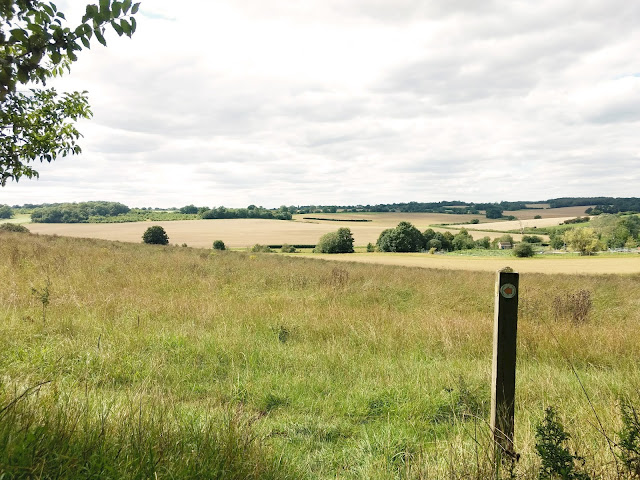
This piece was originally published in CityMetric in 2020. I’m walking through a lush river valley, home to cows, sheep, and even baby Shetland ponies. I can see the surprisingly steep banks of the River Chess ahead, formed when the owner of Latimer House chose to enhance the natural beauty of his rear view with an unexpectedly wide lake. This is the Chess Valley, on the borders of Buckinghamshire and Hertfordshire, and it’s totally perplexing that this 15-mile long stretch of rural land, totally outside anything resembling London, gets a good six stations on the Tube map. This is the outermost part of the Metropolitan Line. As the first railway to tunnel under London, it gave birth to the Underground, but it never really stopped being a bit like a heavy-rail train – so once it’s in the Home Counties, the line feels a lot less like rapid transit and a lot more like commuter rail. The Metropolitan Line bore a child, and that child was Metroland: a hugely ambitious attempt to encourage ...